I think South Asian fashion can be evolved in its own school and blended with western fashion – for modern glamour. In this article, I propose some designs to further this world, in luxury.
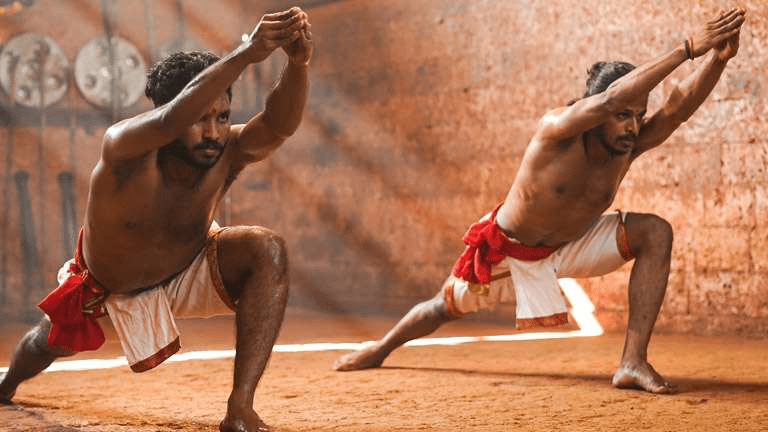
This is a short veshti – used in Kalari as it’s an easily moveable style. It’s made of cotton – wrapped around. This is a more functional version, but in Indian fashion years ago – this was used throughout. This can be developed to be used, gender-neutrally, as a modern luxury, with breathable materials, and South Indian motifs.
We can reference designs forth that evolve south Indian designs with the current technologies for couture styles
An example is seen below:
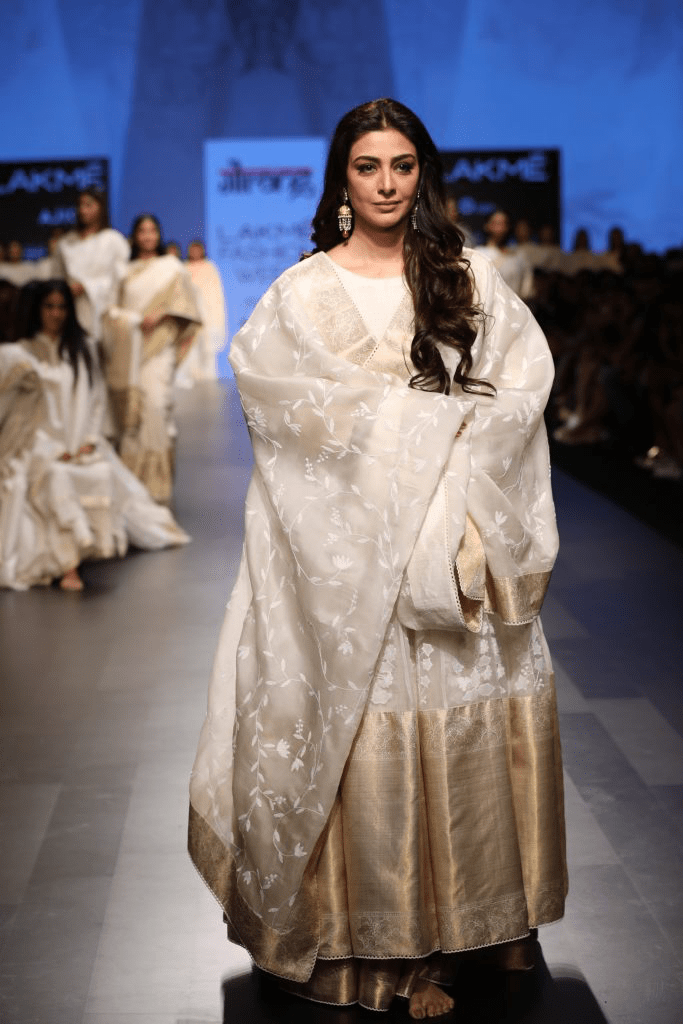
Gaurang takes South Indian inspired motifs and large textile-end Kasavu, or Zari, in a Churidhar – Kurti – Anarkali fashion. This beautifully blends the South Indian designs forward that we can use for such cases. He’s able to achieve this in a light and airy fashion, something that is less seen in South Indian styles – but you can very well see here – with the seemingly Chikankari embroidery styles combined with the kasavu ends.
Let’s take more of Gaurang Shah’s designs that innovate in form and color-mix
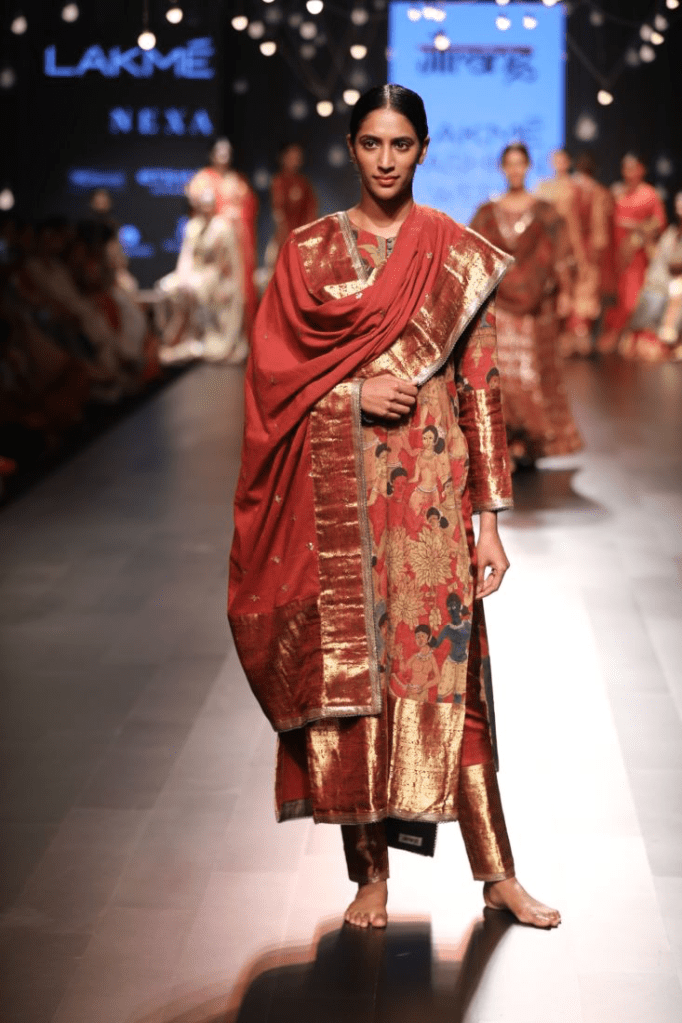
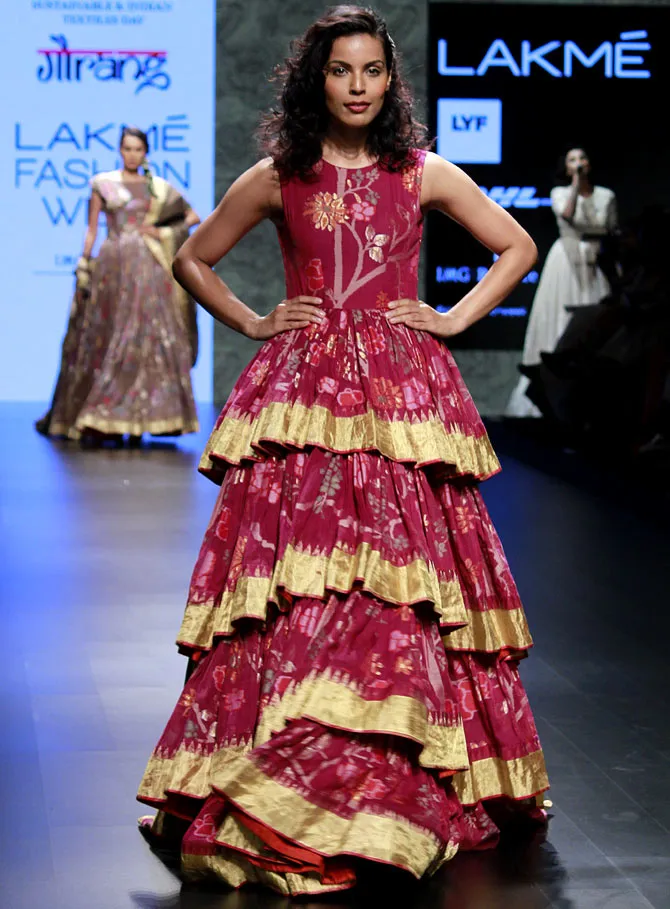

He’s able to take South Asian styles from all corners and fuse them, as seen in these designs.
I want to further this school of design – take South Indian origin designs, and expand them – bring them to a more mobile form of clothing, like Pavadai, or Lehengas
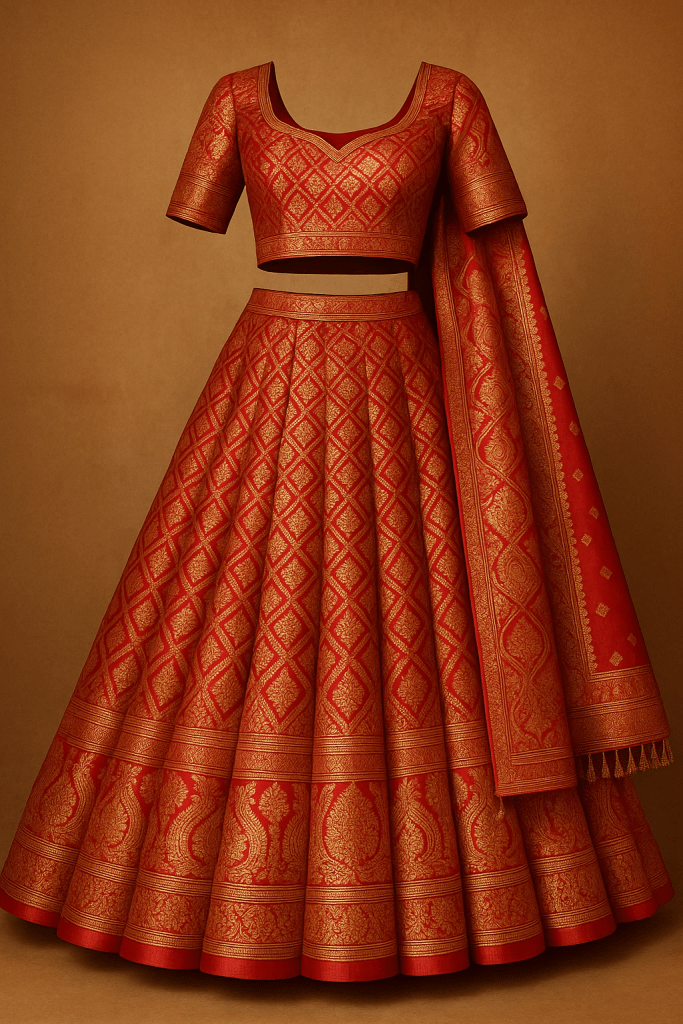
I’ve AI-generated a concept above of this idea, which isn’t too conceptually far from a Gaurang Shah design
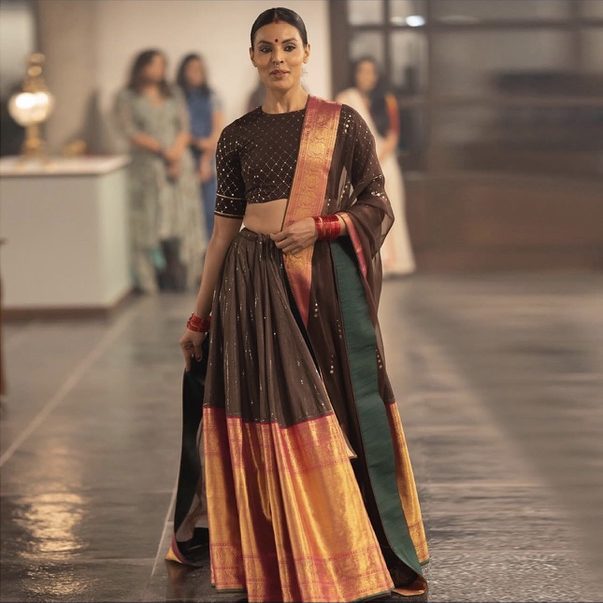
This has been achieved in the recent film, Ponniyin Selvan:
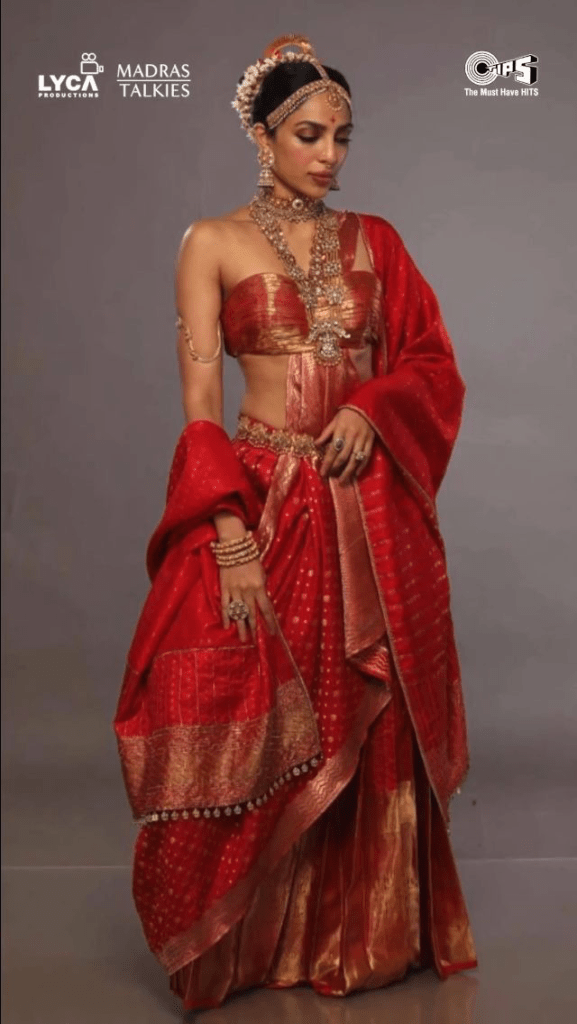
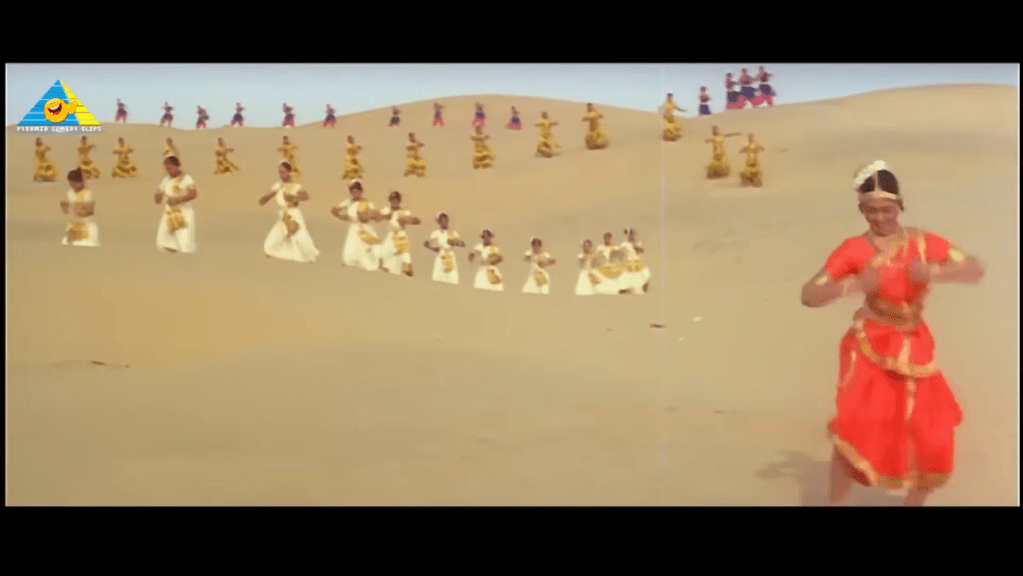
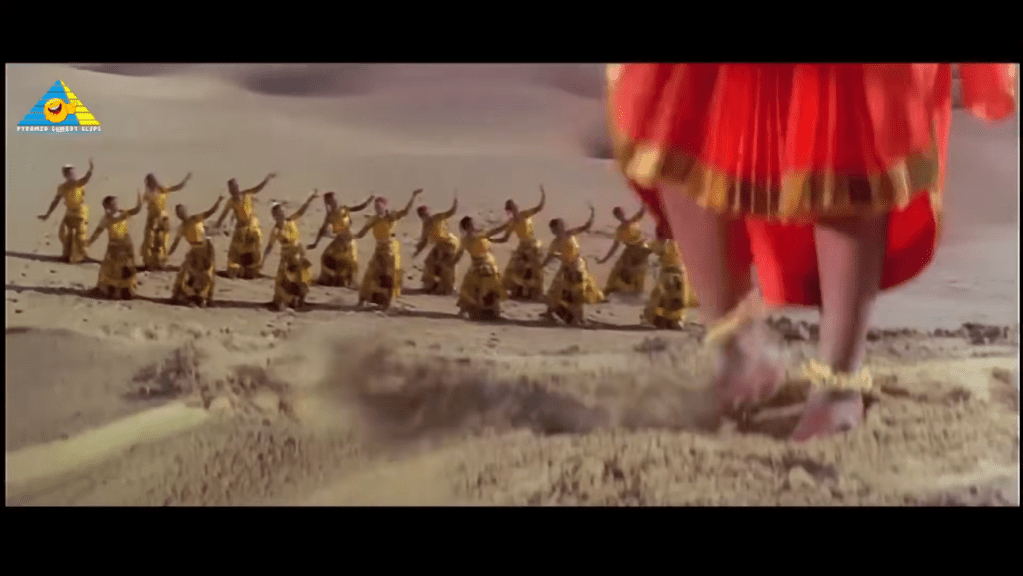
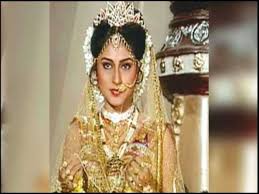
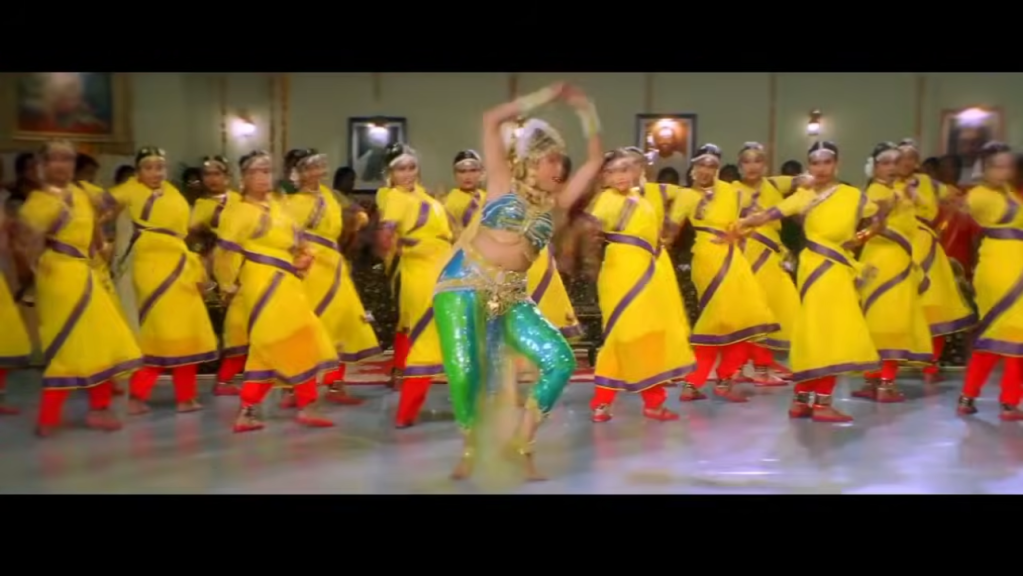
We also see this in older films as the longer Pavadai:
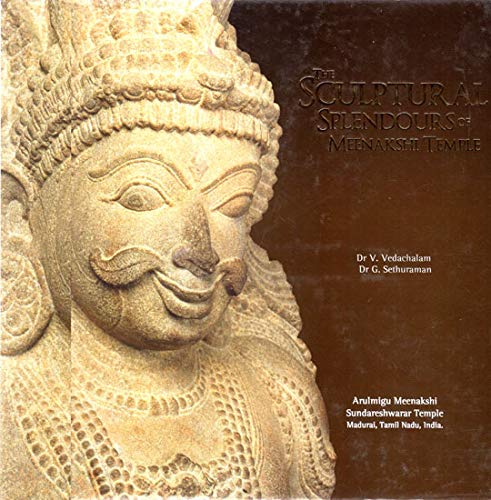
I think we can learn from South Indian architecture, and use such motifs, such as the South Indian motifs used in the panel below for these cases:

we could use such sculptures to apply motifs to a variety of glamour designs. Many of these designs have cultural significance that we can evolve – as they’re native, and often compatible with factors such as weather and tradition. See below, the headdress used in this sculpture, along with the shoulder cap jewelry, and the large, circlet earrings:
Take these circlets for a deity in Madurai Meenakshi Temple:
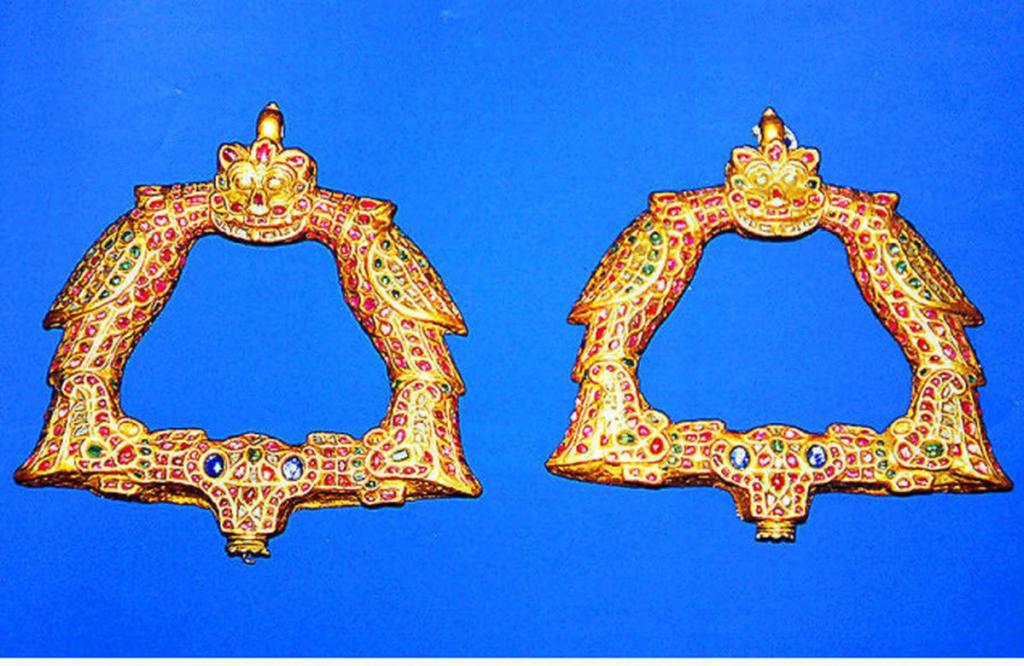
They use animal iconography, along with heavy use of either ruby or garnet (red-pink), emerald (green beryl), and sapphire or blue topaz on yellow gold. We should enhance this use of animal iconography, both in art/architecture and fashion design.
We can take traditional jewelry designs and evolve them with new materials. Traditional jewelry designs in the past were not solely stemmed in the personal choice we have today – it was largely in materials of geographical and trade ability – and weather-proof designs. Take the use of cotton & silk clothing in Kerala, and wood based architecture – these are both breathable and mold-resistant through heavy rain – to avoid mildew/algae growth. Though, with globalization and modern technology, we can actually use any material available around the world, in any location, with new engineering methods, as art forms diffuse. While India has largely centered on Gold for jewelry – with modern technology and global art forms, we can use silver into the southern style of design. Take the traditional Mullai Mottu Mala – the Jasmine necklace of South India:
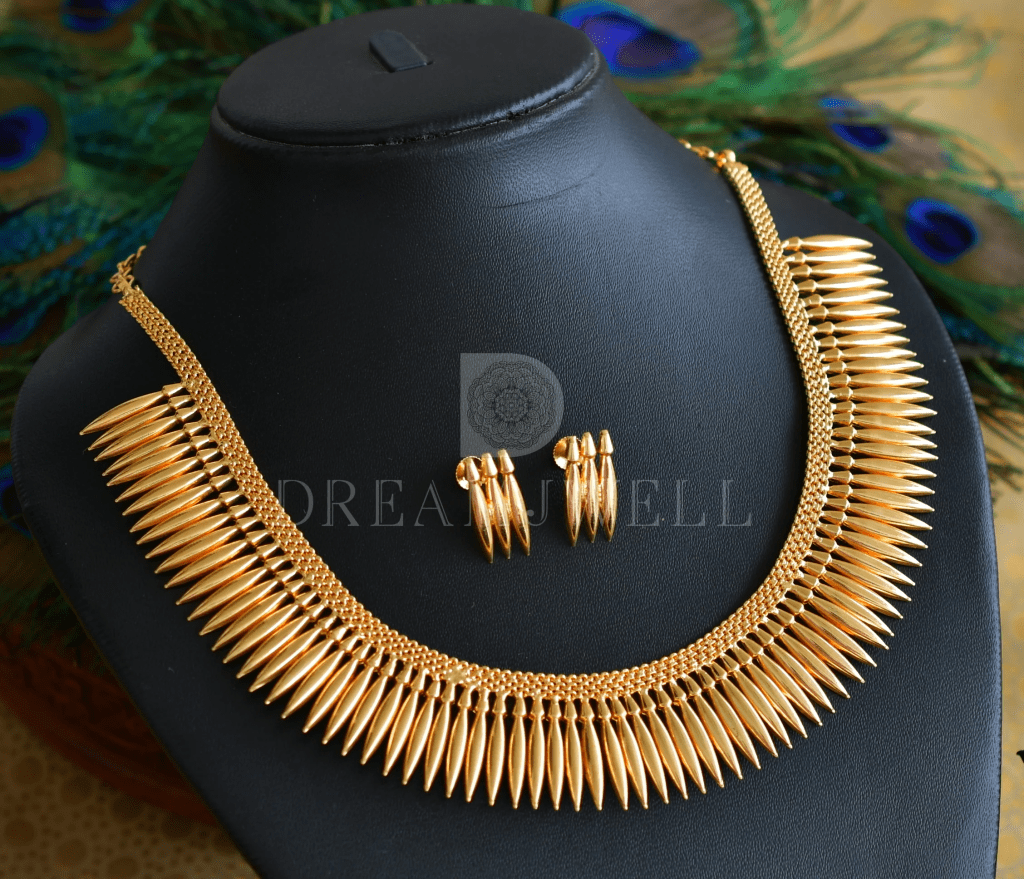
We can use this design and generate a version as silver (with AI) – which is breathable, and light:
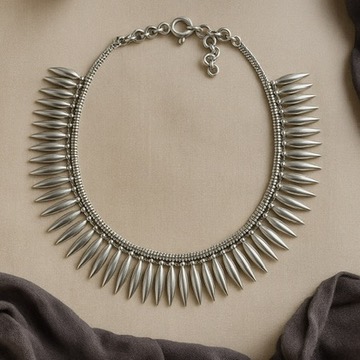
This design is easily applicable panculturally – wearing this with a minimal linen dress would be a strong pairing.
We can do the same with the traditional manga-malai, or ‘mango necklace,’ shown below as the solid gold back of a ruby-studded one:
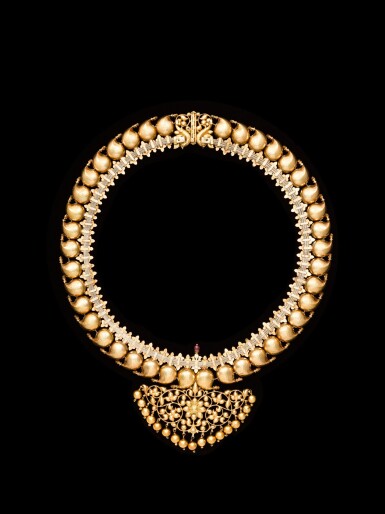
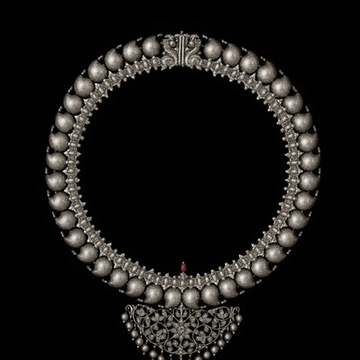
This is using yellow gold, garnet, spinel, or rubies, and emerald or green beryl. We can evolve this design to use sterling silver, generated below:
In the line of jewelry design – I’ve taken inspiration from the Yaali and the lotus – two core Tamil designs – and attached them to a variety of jewelry designs that are possible to create with AI as possible design-language forms. For one, a signet ring – with the Yaali centered:

a ferocious Yaali armband, and lotus-yaali earrings in solid gold, as generated below:

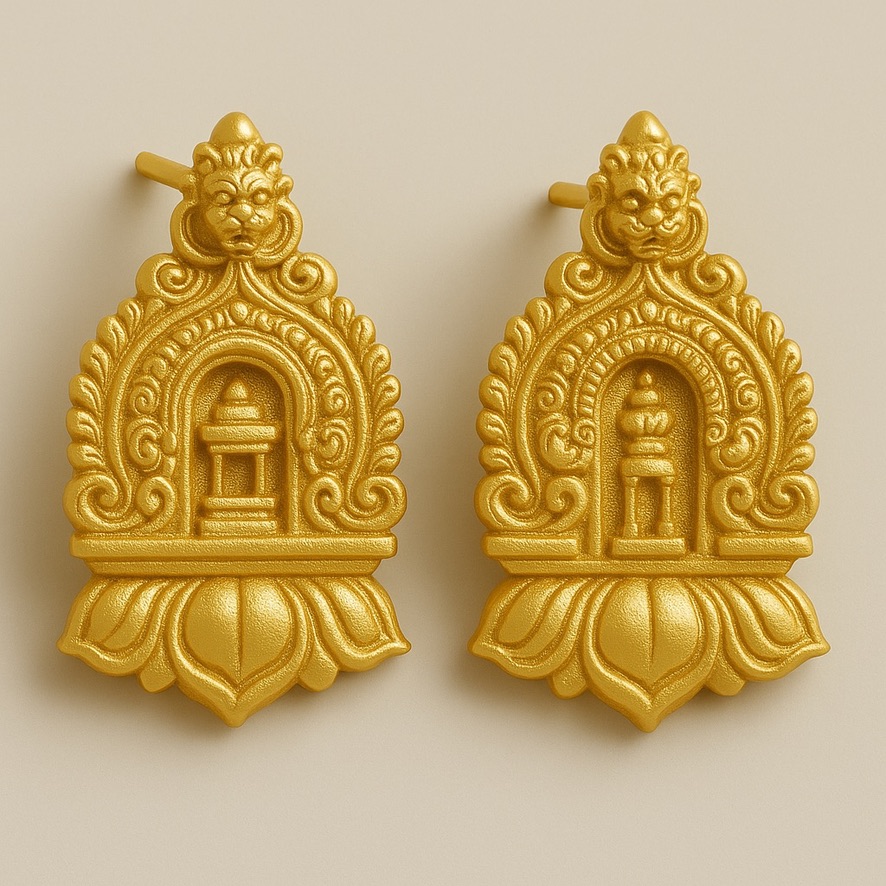
These are AI-Generated and have imperfections – but they are concepts for what could be possible. These explorations are conceptual studies, not commercial products, and exist to define a visual language rather than a finished collection.
For the veshti, there is a lavish belt, called an Oddiyanam, that is worn in south India, worn often with Sarees today, and bharatnatyam outfits. However, modern examples are far less ornate compared to traditional examples, see below:
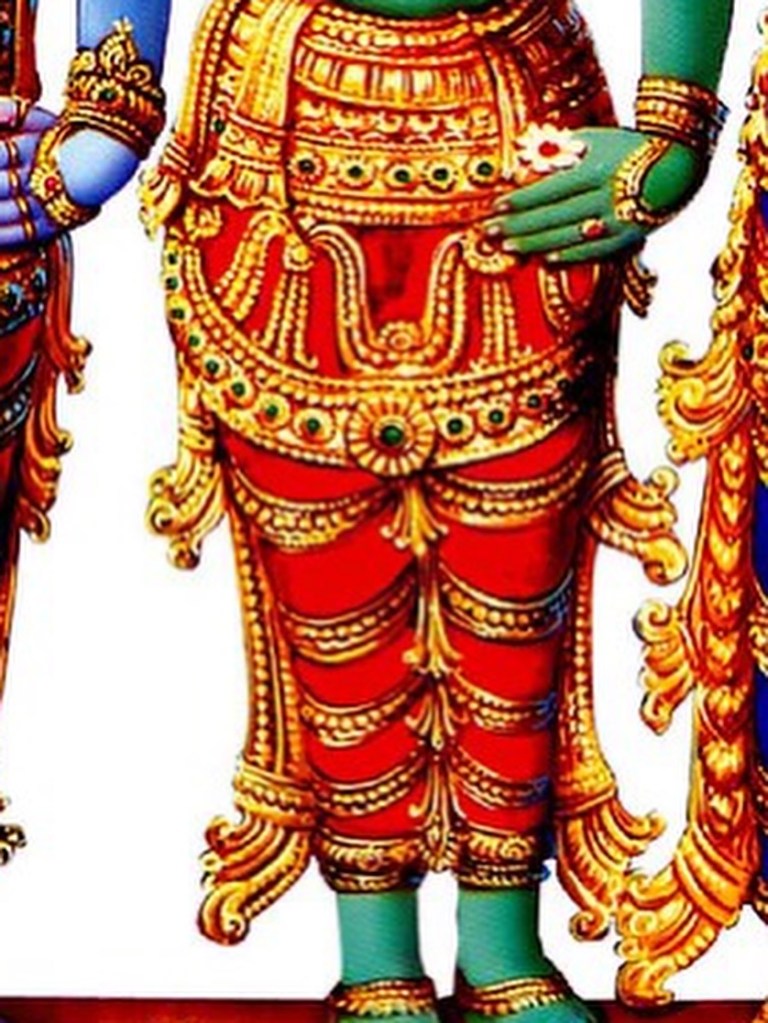
This is a stylized example of a veshti with a Oddiyanam, with emeralds set in. She wear anklets with the luxurious silk veshti. We could use this combination today, with high-luxury, glamorous form.
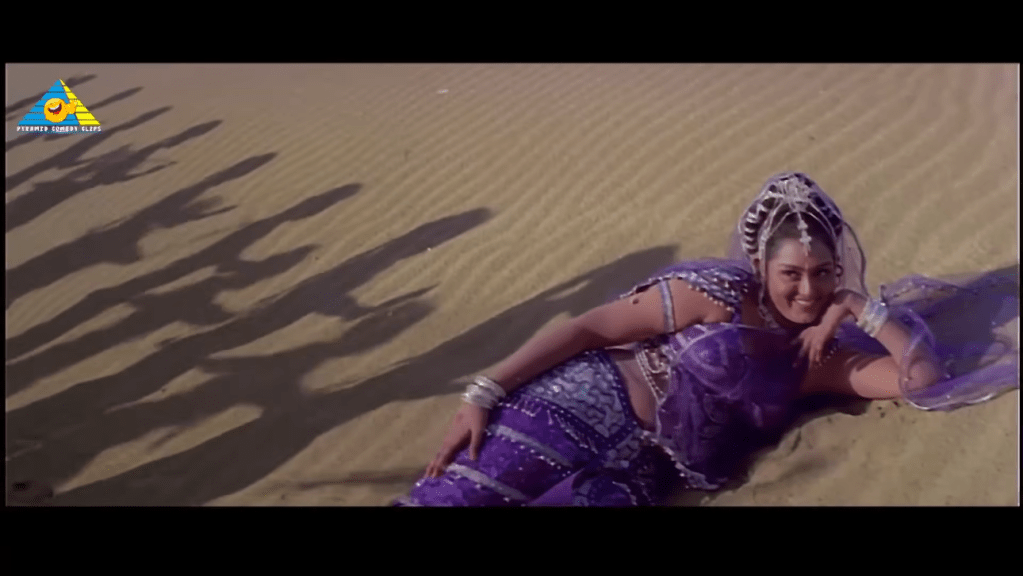
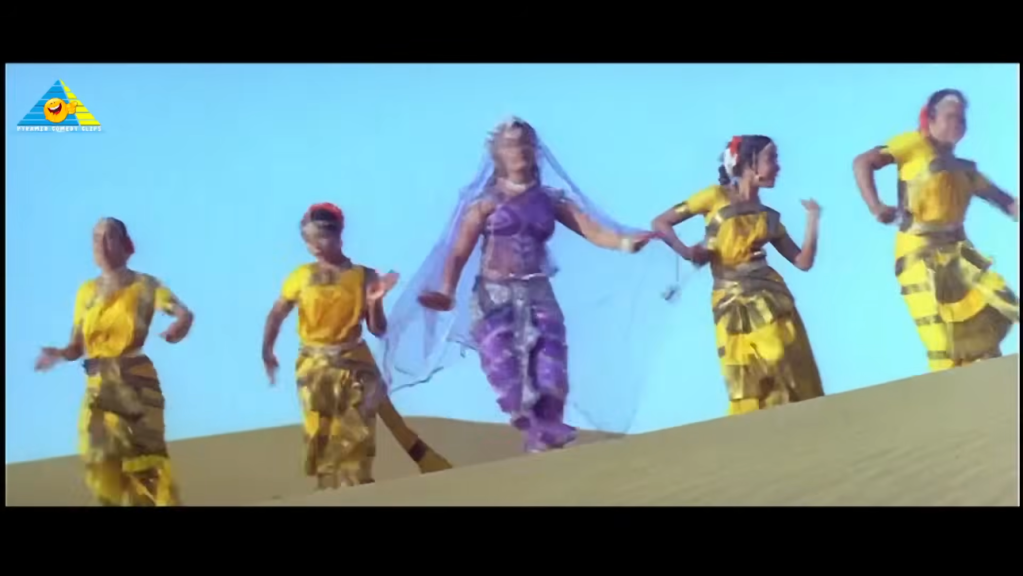
A luxurious veshti as such is depicted in movies with costume-design and paintings of the past with the glamour of India’s past tradition.:
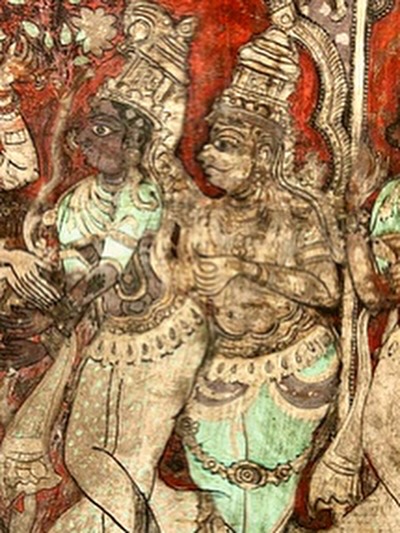
There’s a another belt, which is on the mid-torso, under the chest, worn by men and women, though we see a larger form more so in the contexts of men – as seen below:
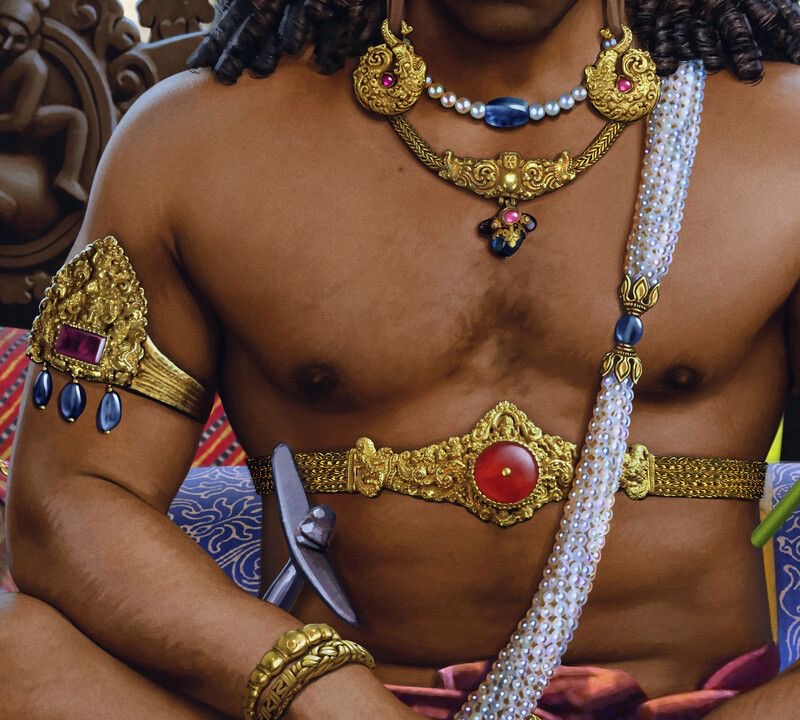
There’s a band worn from the shoulder to the waist – with different materials, though this one seems to be of pearl. We can use these styles and evolve them for today.
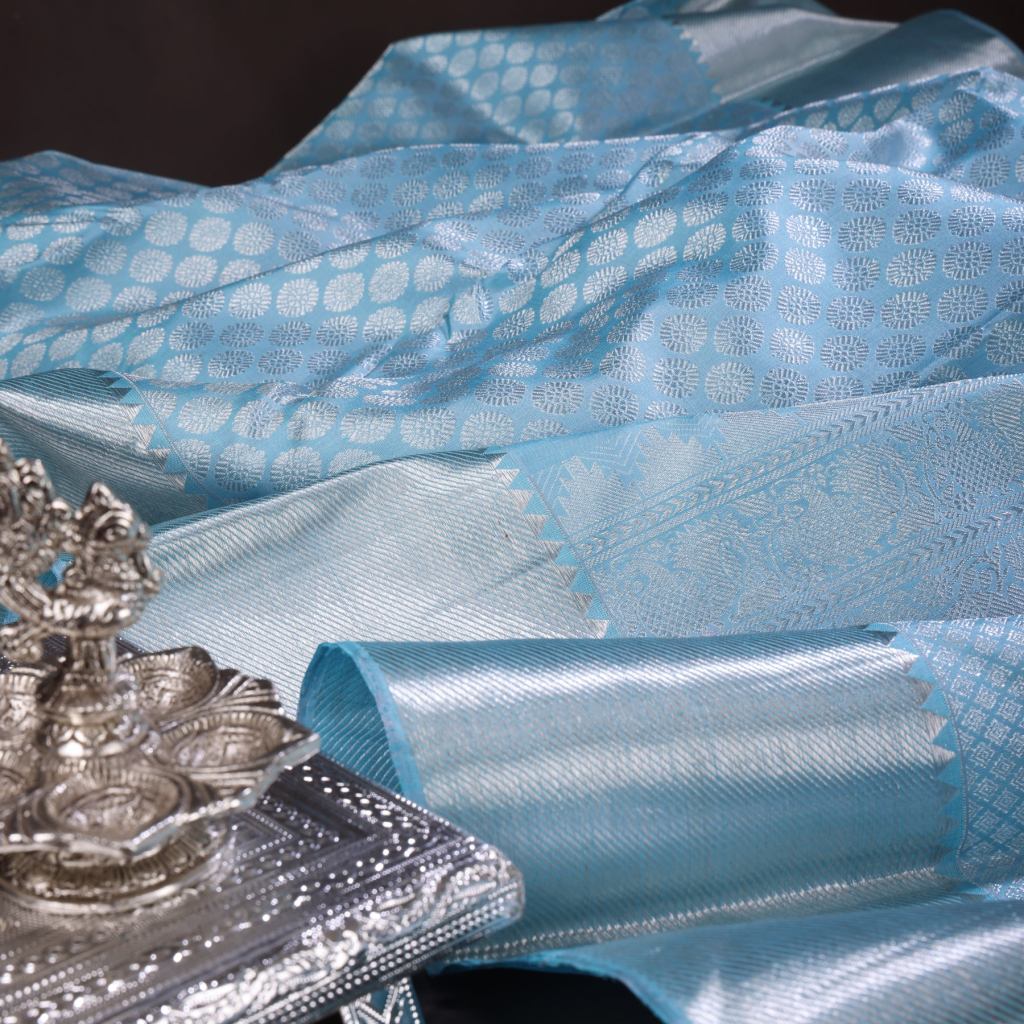
I propose we expand the use of sterling silver, silver thread and platinum jewelry to the South Indian school of art, just as it’s silver sculpture and silver thread is used here in this kanjivaram image from Kanakavalli Edit:
© VIVEK VIJAYAN PILLAI. All rights reserved.
This article, including its concepts, language, structure, and original ideas, is the intellectual property of Vivek Vijayan Pillai. No part of this work may be reproduced, distributed, adapted, or used in any form without explicit written permission.
Any unauthorized use, replication, or derivative work based on this material is strictly prohibited and will be subject to legal action.
